

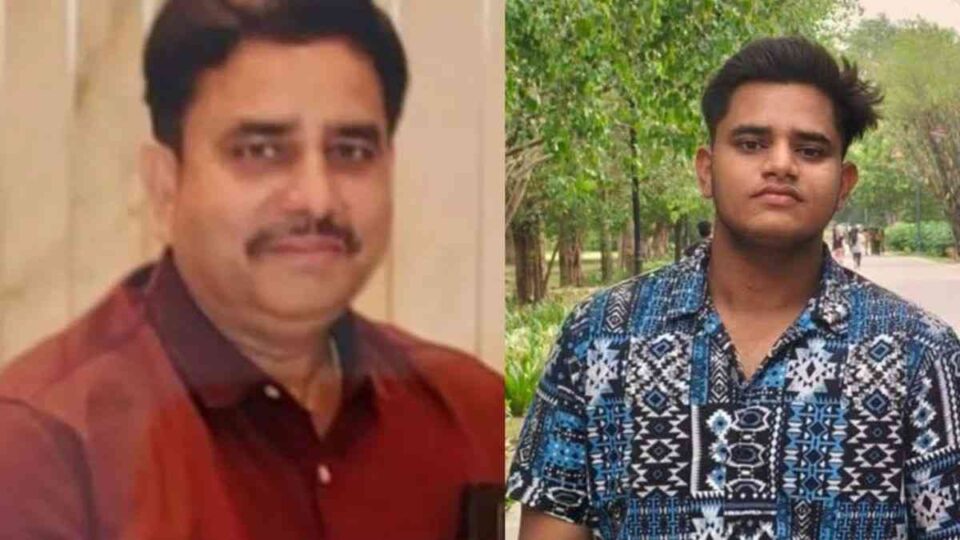
Lucknow Horror: Son Kills Father, Dismembers Body, Hides Torso in Drum After NEET Pressure Argument
Lucknow, Uttar Pradesh — A shocking and gruesome crime in Lucknow, Uttar Pradesh has left neighbours horrified and sparked a major police investigation after a son allegedly shot his father dead, dismembered the body, and attempted to dispose of the remains inside their own home in one of the most brutal domestic violence cases the city has seen in recent memory. The murder — which police say occurred on 20 February 2026 — has drawn attention not only because of its brutal nature but also due to the reportedly complex motives behind the attack, including pressure over competitive exams.
Brutal Killing in Aashiana
The victim, Manvendra Singh (49) , was a businessman in Lucknow’s Aashiana area, known locally for running a pathology lab and liquor trade that had established him as a prominent figure in the community. Early on the morning of February 20, Manvendra was shot dead at his three-storey residence by his only son, Akshat Pratap Singh (21) , the Uttar Pradesh Police confirmed, ending a life in moments of violence.
According to police, the murder took place around 4:30 am after a heated quarrel between the father and son escalated beyond control. Both lived in the house along with Akshat’s younger sister, who would later become an unwilling witness to the aftermath. The argument reportedly stemmed from long-standing family tensions — including disagreements over Akshat’s future and educational choices — that had built up over months and finally exploded into lethal violence.
After shooting his father inside the house using a licensed firearm owned by Manvendra himself, Akshat is alleged to have dragged the body downstairs, taken it to a vacant room on the ground floor, and began dismembering it in an effort to conceal the crime with chilling calculation. Police say he used sharp tools to cut the body into pieces and packed some parts in plastic before placing the torso and head inside a large blue drum kept inside the residence, hoping to hide evidence of his actions.
Attempt to Conceal Evidence
Akshat’s attempt to hide the crime was particularly disturbing in its systematic nature and the lengths to which he went to avoid detection. Investigators found the torso and head tucked inside the blue drum, while hands and legs were reportedly discarded in different nearby areas such as Kakori and Sadrauna villages, according to police statements.
At one point, he even tried to dispose of some of the body parts using a vehicle, raising alarm among neighbours and relatives when bloodstains were noticed on the premises. The vehicle has been seized by police for forensic examination. Forensic teams are now examining both the house and the car for additional evidence that may help build a complete picture of the crime.
The attempt to scatter body parts across multiple locations suggests premeditation and an awareness of forensic investigation techniques, though police have not yet confirmed whether Akshat had prior knowledge of such matters.
Family Turmoil and Possible Motives
Initial police statements and subsequent local reporting suggest that the conflict between Manvendra and his son was not new or isolated but had been festering for some time. Investigators found that Manvendra had been pressuring Akshat to prepare for competitive examinations, particularly the highly competitive NEET medical entrance test, and was urging him to pursue a medical career — a path the son reportedly did not want to follow despite repeated insistence.
According to some accounts, Akshat felt constant pressure and criticism from his father over his future plans and education, which contributed to ongoing arguments that may have created a toxic domestic environment. The pressure to succeed in exams that determine admission to prestigious institutions can be immense, and in this case, appears to have contributed to a fatal breakdown in family relationships.
Additional reports also indicate that Manvendra had previously tracked a jewellery theft at home, which neighbours believe may have added tension to the father-son relationship before the murder as trust eroded between family members. Investigators are now exploring that angle as part of the broader investigation, examining whether financial issues or other disputes played a role.
Missing Person Report and Police Response
After the killing, Akshat reportedly filed a missing person’s complaint at the local Ashiana police station, claiming his father had not returned home, in an apparent attempt to mislead authorities and buy time for evidence disposal. However, conflicting statements and suspicious behaviour during questioning prompted deeper investigation by officers who sensed something was wrong.
When police eventually searched the home after neighbours reported a foul smell emanating from the premises — a common indicator in such cases — they discovered the blue drum with the torso inside, confirming their worst suspicions. Akshat was arrested at the scene and later confessed to the murder, police said, providing details about the sequence of events.
Deputy Commissioner of Police Vikrant Vir stated that the weapon used — a licensed firearm belonging to Manvendra — was recovered and sent for forensic analysis to confirm its use in the crime. The police have also registered a case under sections of the Indian Penal Code related to murder and evidence tampering as the investigation continues.
Impact on the Sister and Community
Akshat’s younger sister, a Class 11 student, is believed to have witnessed parts of the incident or its immediate aftermath, placing her in an unimaginably traumatic situation. Police told reporters that she was allegedly intimidated into silence at the time of the murder, which raises serious concerns about her psychological well-being and the depth of trauma endured by the family.
The psychological impact on a teenager who witnessed such violence and was then threatened into silence will require long-term support and counselling. Child welfare authorities have been alerted to her situation.
Neighbours in the upmarket Aashiana residential area described the crime as “shocking” and “beyond comprehension,” emphasising that family disputes should never escalate to violence of this magnitude. The quiet residential neighbourhood has been left reeling.
Academic Pressure and Family Violence
The case has sparked broader discussions about the immense pressure placed on young people in India to succeed in competitive examinations, and how that pressure can manifest in family relationships. The NEET exam, in particular, is one of the most competitive in the country, with hundreds of thousands of students competing for limited medical seats.
Mental health professionals have long warned about the consequences of excessive parental pressure on academic performance, noting that it can lead to depression, anxiety, and in extreme cases, family violence. This case may become a tragic example of those warnings ignored.
Ongoing Investigation
Police said they are continuing their search for any discarded body parts and are conducting a thorough forensic examination of the scene, vehicle, and weapon used to build an airtight case. The case file is being developed to include all relevant evidence before formal charges are pressed and court proceedings begin.
As authorities piece together the motives and sequence of events, questions linger over how domestic disputes — especially those involving academic and career pressures — can escalate to such tragic and violent outcomes that destroy entire families.
Local law enforcement has urged families to seek mediation and legal support in resolving conflicts before they spiral out of control, and to recognize the warning signs of escalating tension.
Also Read: Deadly Air Ambulance Crash in Jharkhand Leaves 7 Dead on Medical Flight
Conclusion
The Aashiana murder case stands as a horrific reminder of what can happen when family conflicts go unresolved and pressures build without outlet. One man is dead, another faces life in prison, and a young girl must live with trauma.
Academic pressure, family conflict, and a tragedy that tears a family apart.
