

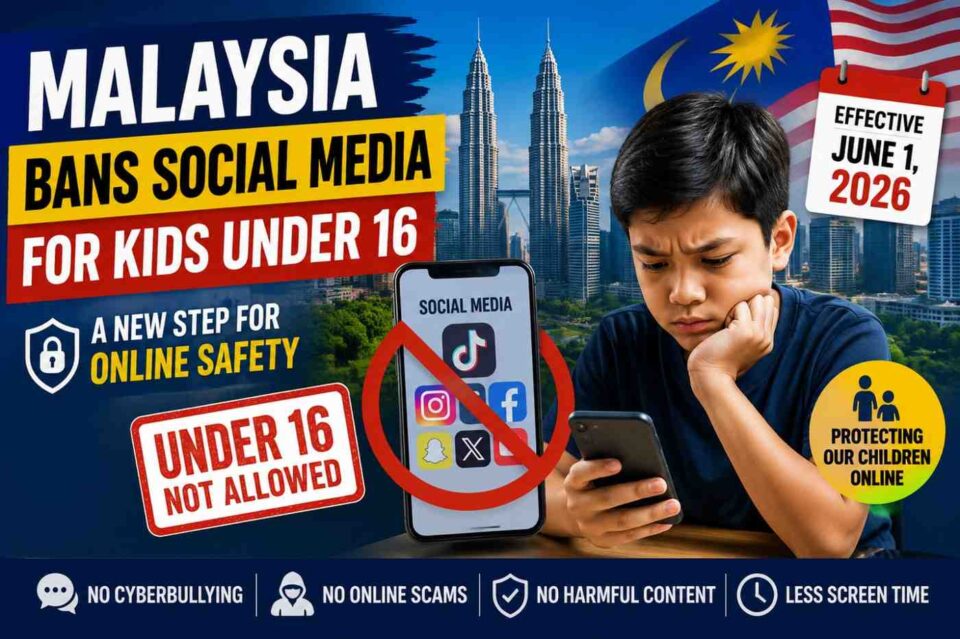
Malaysia has introduced a major new rule for young internet users. Starting June 1, 2026, children under the age of 16 can no longer create or own social media accounts. As a result, the country has become one of the first in Asia to enforce such a strict online safety law.
The decision has sparked discussion around the world. While many people support the move, others have raised concerns about how the rule will work.
Why Malaysia Introduced the Social Media Ban?
The Malaysian government says the ban aims to protect children from online dangers. Today, many young people spend hours on social media every day. Although these platforms can be fun, they can also expose children to harmful content.
For example, children may face cyberbullying, online scams, or contact from strangers. In addition, experts have warned that too much screen time can affect sleep, learning, and mental health.
Because of these risks, officials believe stronger rules are needed. Therefore, they introduced the under-16 social media ban.
How the New Rule Will Work?
Under the new law, social media companies must prevent children under 16 from opening accounts. This rule applies to popular platforms such as TikTok, Instagram, Facebook, Snapchat, and X.
Furthermore, companies must improve their age-checking systems. Users may need to provide documents or other information to confirm their age.
The government also expects social media firms to review existing accounts. As a result, some underage users could lose access to their profiles.
Companies that fail to follow the rules may face penalties. Therefore, technology firms are working to update their systems quickly.
Also read LPG Price Hike June 2026: Commercial LPG Cylinders Become Costlier From June 1
What Supporters Say About the Ban?
Many parents have welcomed the decision. They believe children need stronger protection while using the internet.
According to supporters, social media often creates pressure among young users. For instance, children may worry about likes, comments, and follower counts. Consequently, some experts believe social media can increase stress and anxiety.
Supporters also argue that the ban may encourage children to spend more time on healthy activities. Instead of scrolling through videos, they could focus on sports, reading, hobbies, or family time.
Moreover, supporters believe the rule sends a clear message about online safety.
Why Some People Disagree?
However, not everyone supports the new law. Some experts believe education is more effective than a complete ban.
They argue that children can still find ways to access social media. For example, some may use family accounts or other devices. Therefore, critics question whether the law can fully achieve its goals.
In addition, privacy advocates have raised concerns about age verification systems. They worry about how personal information will be collected and stored.
Because of these concerns, some groups are calling for stronger privacy protections alongside the new rules.
How the Ban Could Affect Children?
The new law may change daily life for many young people in Malaysia. Previously, children could easily join social media platforms. Now, they must wait until they turn 16.
As a result, some children may feel disappointed. After all, social media is often used to chat with friends, watch videos, and follow trends.
On the other hand, supporters believe the change could create healthier habits. They say children may spend less time online and more time on school activities.
Meanwhile, parents may take a larger role in helping children use technology safely.
What Other Countries Are Doing
Malaysia is not alone in taking action. Around the world, governments are discussing ways to protect children online.
Several countries have explored stricter rules for social media use. Likewise, many lawmakers are studying how technology affects young people.
As online platforms continue to grow, more governments may introduce similar policies in the future.
The Future of Online Safety for Kids
The debate over children’s social media use is far from over. Technology continues to change quickly. Therefore, governments face new challenges every year.
Malaysia’s under-16 social media ban is an important step in that discussion. While supporters see it as a strong safety measure, critics believe more education is needed.
Nevertheless, the law has started a global conversation about how children should use social media. In the coming months, experts will closely watch the results.
For now, one thing is clear: protecting children online has become a top priority for many countries around the world.
Also read Malaysia bans social media for children younger than 16.
