

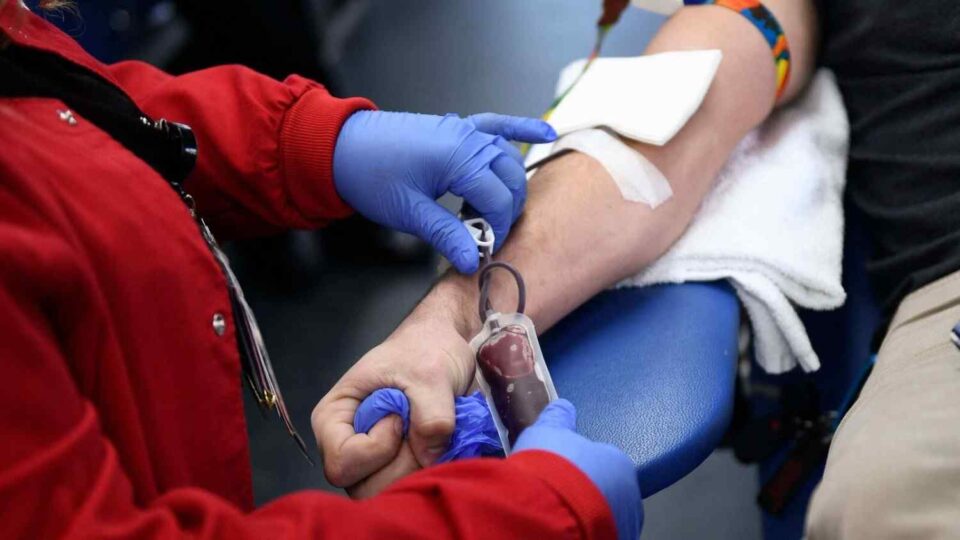
Government Defends Blood Donation Ban on Gay Men, Transgender Individuals in Supreme Court
New Delhi, India — The Central government has defended its policy that bars certain groups — including gay men, transgender individuals and sex workers — from donating blood in India, stating that the restriction is based on medical and scientific considerations aimed at protecting public health.
The issue came up during a hearing in the Supreme Court of India, where petitions had challenged the existing rules under the Guidelines on Blood Donor Selection and Blood Donor Referral, 2017. These guidelines were issued by the National Blood Transfusion Council (NBTC) and the National AIDS Control Organisation (NACO) under the Union Health Ministry.
In its response to the court, the government argued that the exclusion of certain groups from donating blood is not meant to discriminate but is based on epidemiological studies and public-health considerations. Officials explained that transgender persons, men who have sex with men (MSM) , and female sex workers are classified as a “high-risk category” for HIV and other infections that can be transmitted through blood transfusions.
According to the Centre, research shows that the prevalence of HIV in these groups is significantly higher compared with the general population. Authorities said the guidelines are designed to ensure that blood supplied to hospitals remains safe for recipients, especially those who are already vulnerable or critically ill.
Government representatives also told the court that the policy had been reviewed by medical experts and specialist bodies, which recommended maintaining the restrictions. They emphasised that the primary objective of the national blood-transfusion system is to minimise the risk of infections being transmitted through donated blood.
During the hearing, the Supreme Court indicated that it was cautious about interfering with decisions taken by medical experts. The bench observed that ensuring the safety of patients receiving blood transfusions must remain a priority.
The Chief Justice noted that even a small risk of infection could have severe consequences for patients. He remarked that if there is even a minimal chance of transmitting disease through donated blood, authorities must carefully consider whether relaxing the restrictions is safe.
The court has not yet delivered a final verdict and has scheduled the matter for further hearings.
The policy has been challenged by activists from the LGBTQ+ community who argue that the ban is discriminatory and outdated. Petitioners claim that the rules unfairly target individuals based on identity rather than assessing actual risk behaviour.
One of the petitions was filed by transgender rights activist Santa Khurai, who argued that permanently barring members of the LGBTQ+ community from donating blood violates constitutional rights to equality and dignity.
Activists also point out that modern screening technologies can detect infections such as HIV, Hepatitis B and Hepatitis C in donated blood. Because all blood units are tested before being used in transfusions, they argue that a blanket ban on certain groups is unnecessary.
The government, however, maintains that testing alone cannot completely eliminate risk. Officials say there is a “window period” between the time a person becomes infected and the time when the infection can be detected by laboratory tests. During this period, a person may test negative even though they carry the virus.
Authorities argue that restricting donations from high-risk groups helps reduce this possibility and ensures greater safety in the blood-transfusion system.
The controversy has sparked debate among public-health experts, activists and legal scholars. Critics say the policy reinforces stigma against LGBTQ+ communities, while supporters argue that it prioritises patient safety.
The Supreme Court’s final decision in the case is expected to play a key role in determining whether India’s blood-donation guidelines remain unchanged or are revised in the future.
Also Read: Farooq Abdullah Responds After Assassination Attempt, Says ‘Killer Always Has Advantage’
Until then, the existing rules continue to prevent transgender persons, gay men and sex workers from donating blood under the national guidelines governing blood banks and transfusion services in the country.
Centre defends blood donation ban on LGBTQ+ groups in Supreme Court: “Safety first.” Activists call it discrimination. The debate over science vs. rights continues.
