

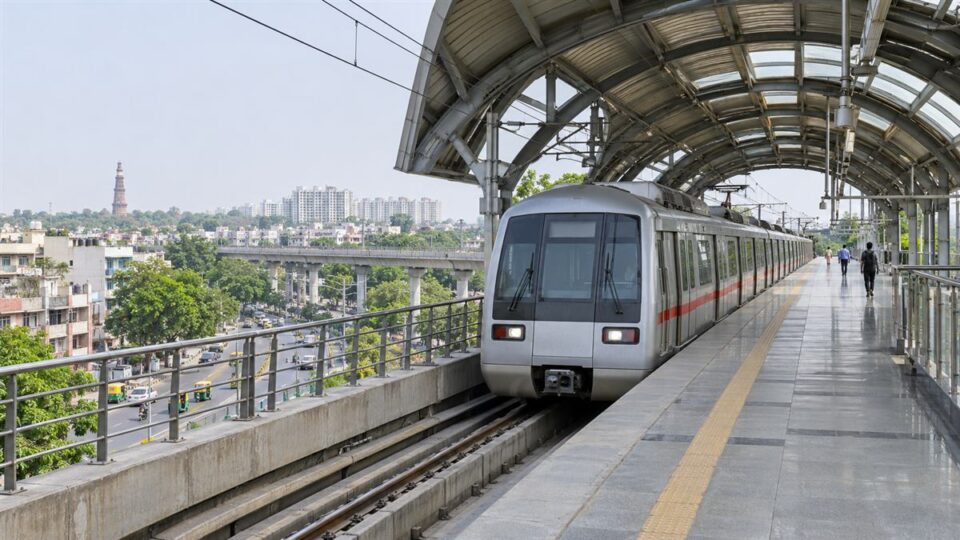
NEW DELHI, November 3 — Delhi Metro is adding 20 weekday train trips from Tuesday as the capital’s worsening air quality puts renewed pressure on commuters to leave private vehicles at home.
The increase takes the total additional weekday services across the network to 40, according to the Delhi Metro Rail Corporation’s November 2 announcement. The latest change is 20 more trips, rather than 40 newly added trips on top of the existing arrangement.
The Delhi Metro extra weekday trips follow the introduction of Stage II of the Graded Response Action Plan across Delhi-NCR. DMRC said the purpose was to encourage public-transport use and help reduce pollution.
What changes for passengers
The service addition begins on November 3 and applies to weekdays. The announcement cited in current reporting does not provide a line-by-line breakdown, station-specific departure times or a uniform new interval between trains.
That means passengers should not assume that every corridor receives the same increase or that a particular departure now runs earlier or later. A network-wide trip total describes the scale of additional operations; it is not a replacement for the timetable for an individual journey.
For office workers, students and other regular passengers, the most useful next step is to check current DMRC service information for the route they use. An extra network service may help a journey, but the announcement alone cannot establish the waiting time at a specific platform.
Why the pollution plan has been tightened
The Commission for Air Quality Management invoked GRAP Stage II on November 2 after Delhi’s air quality moved into the “very poor” category. The authority cited an AQI rise from 117 on October 31 to 261 on November 1 and 324 on November 2.
Its directions call for more intensive implementation of Stage I and Stage II measures across NCR. These include steps to control dust and vehicular pollution and encourage greater use of public transport.
The Metro service increase is one part of that response. It should not be treated as a forecast that air quality will immediately improve, or as evidence of a measured reduction in private-car journeys. Those outcomes would need separate data.
Plan the whole journey
A commuter considering a switch from a car needs to look beyond the train ride. The distance to the first station, any interchange and the connection from the final station to the destination all affect whether a journey is practical.
This is particularly relevant for trips that cross municipal or state boundaries. A convenient Metro segment can still require time for a connecting bus, an authorised local service or a walk at either end. Allowing for those connections is more useful than assuming the additional trips remove every possible delay.
Passengers travelling for a fixed appointment should check the route and current operating information before departure. They should also distinguish the Metro announcement from separate road-entry, traffic or parking restrictions, each of which may have its own conditions.
No blanket promise of shorter waits
The announcement does not quantify how much time an individual rider will save. It also does not set out a new weekend arrangement or establish that last-train times have changed.
Those limits matter during the festive period, when a person returning from an evening visit may have different needs from a weekday morning commuter. The addition announced for working days should not be used to infer a later final service.
For travellers unfamiliar with Delhi-NCR, station names, interchange points and the final destination should be checked as a single itinerary. A larger number of operating trips does not by itself identify the correct train, direction or connection.
What to watch next
DMRC’s immediate commitment is clear: 20 more weekday trips from November 3, bringing additional services to 40 across the network. Further operational notices would be needed to establish any subsequent changes in the allocation, frequency or duration of those services.
Air-quality decisions can also change as conditions and forecasts are reviewed. Commuters should use the latest official service and traffic notices for the day they travel, rather than relying on a general description of pollution restrictions.
The increase offers an additional public-transport option as authorities seek to reduce the burden of road traffic. For passengers, its practical value will be determined on the platform and along the connecting journey: whether the service fits their route, their working hours and their destination.
